
Setting up a tank for dwarf shrimp is not difficult, but it is different from setting up a typical fish aquarium. Shrimp are small, sensitive, and heavily affected by stability and surface-level biology rather than flashy equipment.
This guide explains a shrimp-first setup philosophy: how to build a tank that prioritizes shrimp health, survival, and long-term success—especially for beginners. We’ll cover what actually matters, what doesn’t, and why many common setups fail.
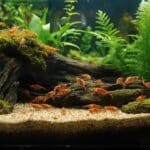
- The Shrimp-First Setup Philosophy
- Tank Size: Bigger Is Easier (Even for Shrimp)
- Filtration: Gentle, Biological, and Shrimp-Safe
- Substrate: Choose Based on Shrimp Species
- Plants: Function Over Decoration
- Hardscape: Surfaces Matter More Than Style
- Lighting: Moderate and Consistent
- Heating & Temperature Stability
- Cycling: More Than Just “Ammonia to Zero”
- Step-by-Step Beginner Setup
- Common Mistakes and Misconceptions
- Advanced Notes (Optional)
- Key Takeaways
The Shrimp-First Setup Philosophy
Most aquarium advice is written with fish in mind. Dwarf shrimp have different priorities.
Shrimp thrive when:
- The tank is biologically mature, not just “cycled”
- Conditions change slowly and predictably
- Surfaces provide constant access to biofilm and microorganisms
A shrimp-first setup focuses on stability, surface area, and time, not high flow, bright lights, or frequent adjustments.
Tank Size: Bigger Is Easier (Even for Shrimp)
Recommended Minimum
- 10 gallons (38 liters) is ideal for beginners
- 5 gallons (19 liters) can work, but requires more care
Smaller tanks change faster. Temperature, pH, and waste levels swing more easily, which stresses shrimp.
Why Size Matters
- More water = more stable parameters
- More surface area = more biofilm
- More margin for beginner mistakes
Large tanks do not mean more maintenance for shrimp—often the opposite.
Filtration: Gentle, Biological, and Shrimp-Safe
Shrimp need filtration for biology, not strong mechanical cleaning.
Best Filter Types
- Sponge filters (air-driven)
- Matten filters
- Low-flow hang-on-back filters with sponge prefilters
Why Gentle Flow Matters
- Shrimp are weak swimmers
- Baby shrimp can be sucked into intakes
- Excess flow reduces grazing time and causes stress
Sponge filters excel because they:
- Provide massive surface area for beneficial bacteria
- Grow biofilm shrimp actively graze on
- Are impossible for shrimp to get trapped in
Substrate: Choose Based on Shrimp Species
Substrate affects water chemistry, plant growth, and shrimp behavior.
Inert Substrates (Beginner-Friendly)
- Sand
- Fine gravel
- Crushed lava rock
Best for:
- Neocaridina shrimp (Cherry shrimp and variants)
- Tap-water setups
These substrates do not alter water parameters, making them predictable.
Active (Buffering) Substrates
- Soil-based aquasoils designed for shrimp
Best for:
- Caridina shrimp (Crystal, Bee, Taiwan Bee)
- RO/DI water setups
Active substrates lower pH and soften water but:
- Lose effectiveness over time
- Require tighter parameter control
- Are less forgiving for beginners
Plants: Function Over Decoration
Plants are not optional for shrimp tanks—they are functional infrastructure.
Best Plant Types for Shrimp
- Mosses (Java moss, Christmas moss)
- Epiphytes (Anubias, Bucephalandra, Java fern)
- Floating plants (Salvinia, Frogbit)
Why Shrimp Need Plants
- Increase surface area for biofilm
- Provide shelter during molting
- Improve water stability
- Support baby shrimp survival
Fast-growing stems are helpful but not required. Dense, slow-growing surfaces matter more than speed.
Hardscape: Surfaces Matter More Than Style
Shrimp interact with hardscape constantly.
Ideal Hardscape Materials
- Driftwood
- Lava rock
- Shrimp-safe stones
Choose pieces with:
- Texture
- Crevices
- Irregular surfaces
Smooth decorative stones look nice but offer little grazing value.
Lighting: Moderate and Consistent
Shrimp do not need intense lighting. Plants and biofilm do.
Recommended Approach
- Low to moderate intensity
- 6–8 hours per day
- Fixed schedule using a timer
Excess light causes algae problems, while inconsistent lighting disrupts biofilm growth.
Heating & Temperature Stability
Most dwarf shrimp prefer stable temperatures over warm ones.
General Guidelines
- Neocaridina: ~20–24°C (68–75°F)
- Caridina: species-dependent, often cooler
Heaters are useful even in warm climates to:
- Prevent nighttime temperature drops
- Maintain consistency year-round
Avoid rapid changes—shrimp are sensitive to sudden shifts.
Cycling: More Than Just “Ammonia to Zero”
A shrimp tank should be aged, not just cycled.
What Shrimp Actually Need
- Established beneficial bacteria
- Mature biofilm layers
- Microorganisms on surfaces
This takes time.
Best Practice
- Cycle the tank fully
- Then allow 2–4 additional weeks of low-intervention running
- Add shrimp only after surfaces show visible biofilm or algae
Rushing this step is one of the most common causes of early shrimp losses.
Step-by-Step Beginner Setup
- Choose a 10-gallon tank if possible
- Add inert substrate (for Neocaridina) or active substrate (for Caridina)
- Install a sponge filter and heater
- Add hardscape and plants
- Fill with dechlorinated water (or RO/DI if required)
- Begin cycling the tank
- Allow additional time for biofilm development
- Test parameters for stability
- Slowly acclimate shrimp using drip acclimation
Common Mistakes and Misconceptions
“Shrimp Need Crystal-Clear, Sterile Tanks”
They need biological richness, not sterility. Some algae and biofilm are healthy.
“Small Tanks Are Easier”
They are cheaper, not easier. Stability is harder in small volumes.
“Frequent Water Changes Keep Shrimp Healthy”
Large or frequent changes can cause parameter swings. Shrimp prefer small, consistent changes.
“Strong Filters Mean Cleaner Water”
Strong flow often harms shrimp and removes food sources.
Advanced Notes (Optional)
- Caridina setups often require RO/DI water and remineralization
- Active substrates have a lifespan and affect long-term planning
- Shrimp breeding success is closely tied to surface area and food availability, not feeding frequency
These topics are worth exploring once basic shrimp husbandry is mastered.
Key Takeaways
- Stability is more important than equipment
- Bigger tanks are easier for beginners
- Sponge filtration is ideal for shrimp
- Plants and surfaces matter more than decoration
- A mature tank outperforms a “new but cycled” tank
- Shrimp-first setups prevent most beginner failures
Next Steps
Once your tank is stable, learn about:
- Shrimp species compatibility
- Proper feeding strategies
- Long-term water parameter management
- Breeding behavior and colony growth
A well-designed shrimp tank rewards patience. When set up correctly, dwarf shrimp are hardy, fascinating, and deeply enjoyable to keep.